The Center for Education Theory, School of Education, Shanghai Jiao Tong University (hereinafter referred to as the "Center") upholds the concept of interdisciplinary innovation. Since its establishment, it has been deeply rooted in the core of educational theories, while addressing the new demands of talent cultivation in the digital and intelligent era. The Center devotes itself to foundational studies such as the inherent laws of education and interdisciplinary integration, while focusing on key issues including thinking development, synergies across science, technology, and the humanities, and the cultivation of values and emotions. It generates theoretical momentum and practical solutions into the high-quality development of education, contributing to the advancement of educational modernization and the cultivation of top-notch innovative talents.
I. Center Introduction
The Center emphasizes multi-dimensional and interdisciplinary research on fundamental educational theories. Currently, it comprises three faculty members—Liu Xueliang, Guan Yuzhen, and Li Chunying—with academic backgrounds in philosophy, history of science and technology, and education. Their research focuses on key issues in education, including thinking education, science education, and value education.
Our Faculty Team:
Liu Xueliang Deputy Director of the Center, Lecturer, Master’s Supervisor.
His research centers on students’ thinking abilities, particularly focusing on "how to develop children’s thinking abilities in the digital and intelligent era." His work covers educational philosophy, philosophy for children, critical thinking, and speculative reading and writing in Chinese. He has also engaged in extensive practical cooperation with primary and secondary schools,try to promote the development of teaching in primary and secondary schools
Guan Yuzhen Tenured Associate Professor, Doctoral Supervisor.
His research focuses on the synergy across science, technology, and the humanities education, as well as the history of science and technology. Key research areas include the origin of science in ancient Mesopotamia, the development of science in early modern Europe, and the circulation of scientific and technological knowledge among ancient civilizations. He has been selected for the Chinese Academy of Sciences "Hundred Talents Program" and the Cyrus Tang Foundation "Cyrus Tang Young Scholars Program."
Li Chunying Lecturer, Master’s Supervisor.
Adopting theoretical speculation as her primary research paradigm, her work mainly focuses on two issues: one is emotion education in the context of value education, including the connotations of emotions such as love, compassion, jealousy, resentment, shame and remorse, as well as their roles and significance in specific educational practices; the other is the reflection and application of modern Continental European philosophical ideas in education (e.g., Pierre Bourdieu’s sociological theories, John Dewey’s philosophical thoughts, and the ideas of the London Line).
II. Brand Development
1. Academic Research
Closely following the trends of the times and national education strategies, the Center addresses prominent issues in current education, such as students' inadequate humanistic literacy, underdeveloped thinking abilities, incomplete development of values, and the disconnect between humanities education and science education. By means of theoretical interpretation, curriculum development and teaching practice, it explores curriculum design and teaching strategies integrating humanities and science. It promotes the development of students' scientific and technological innovation thinking by enhancing their humanistic foundation, so as to cultivate top-notch innovative talents who possess both scientific and technological literacy and humanistic sensibilities.
Faculty members of the Center have published 25 papers in high-level journals, including Journal of Educational Studies, Research in Educational Development, Journal of Dialectics of Nature, Studies in Dialectics of Nature and Global Education Outlook. They have undertaken more than 10 research projects at the national and provincial - ministerial levels, covering key projects of Humanities and Social Sciences sponsored by the Ministry of Education, sub - projects of major projects supported by the National Social Science Fund of China, and general projects of Philosophy and Social Sciences in Shanghai. In addition, they have published 2 translated academic monographs.
Faculty members of the Center actively engage in the development of the academic community. Associate Professor Guan Yuzhen holds multiple academic positions, namely Council Member of the Chinese Society for the History of Science and Technology (CSHST), Deputy Director of the CSHST Committee for History of Sino-Foreign Scientific and Technological Transmission, and Editorial Board Member of The Chinese Journal for the History of Science and Technology (a CSSCI - indexed journal). Lecturer Liu Xueliang serves as Council Member of the Shanghai Professional Committee for Middle School Chinese Teaching and Secretary - General of the School Alliance for Philosophy for Children.
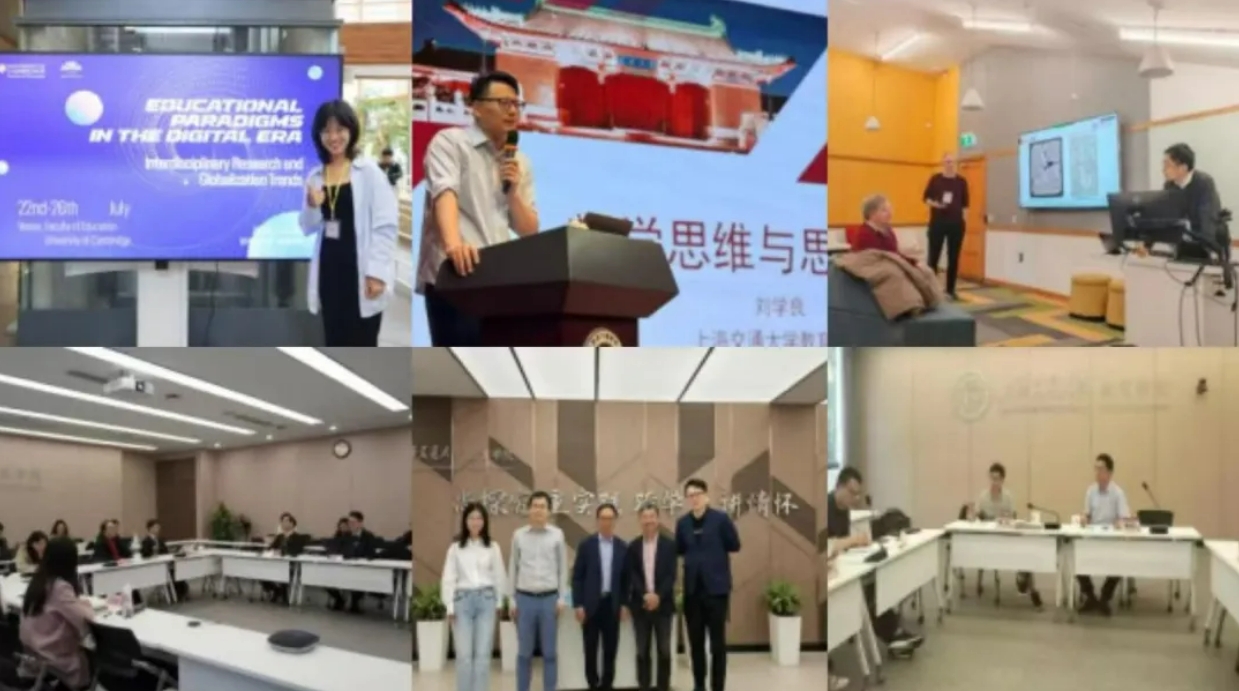
The faculty have participated in multiple academic conferences and delivered presentations, including the 2023 International Congress on the History of Science in East Asia (ICHSEA 2023), the 2025 International Congress on the History of Science and Technology (ICHST 2025), the Research Branch of Educational Philosophy under the Chinese Society of Education, and the National Conference of Educational Philosophy. Moreover, the Center has held multiple Expert Advisory Meetings, which have strengthened academic exchanges with peers in the field.
2. Teaching and Talent Cultivation
The Center assumes the important responsibility of fostering students' theoretical knowledge and offers courses including Fundamental Theories of Education, Principles of Education, History of Science and Technology, A Study on General Secretary Xi Jinping's Important Discourses on Education, Subject Teaching Methods, and Design and Implementation of Chinese Teaching.
Ms. Li Chunying was awarded the 2024 WCU Teaching Award. Associate Professor Guan Yuzhen teaches the core general education course Scientific Spirit for undergraduates from the five East China universities of the C9 League, namely Fudan University, Nanjing University, Shanghai Jiao Tong University, Zhejiang University and University of Science and Technology of China. This course systematically elaborates on the origin and development of science, scientific research methods, as well as the social impacts and ethical responsibilities of science. These courses have deepened students' theoretical literacy, broadened their ideological horizons, and nurtured the critical thinking of future teachers.
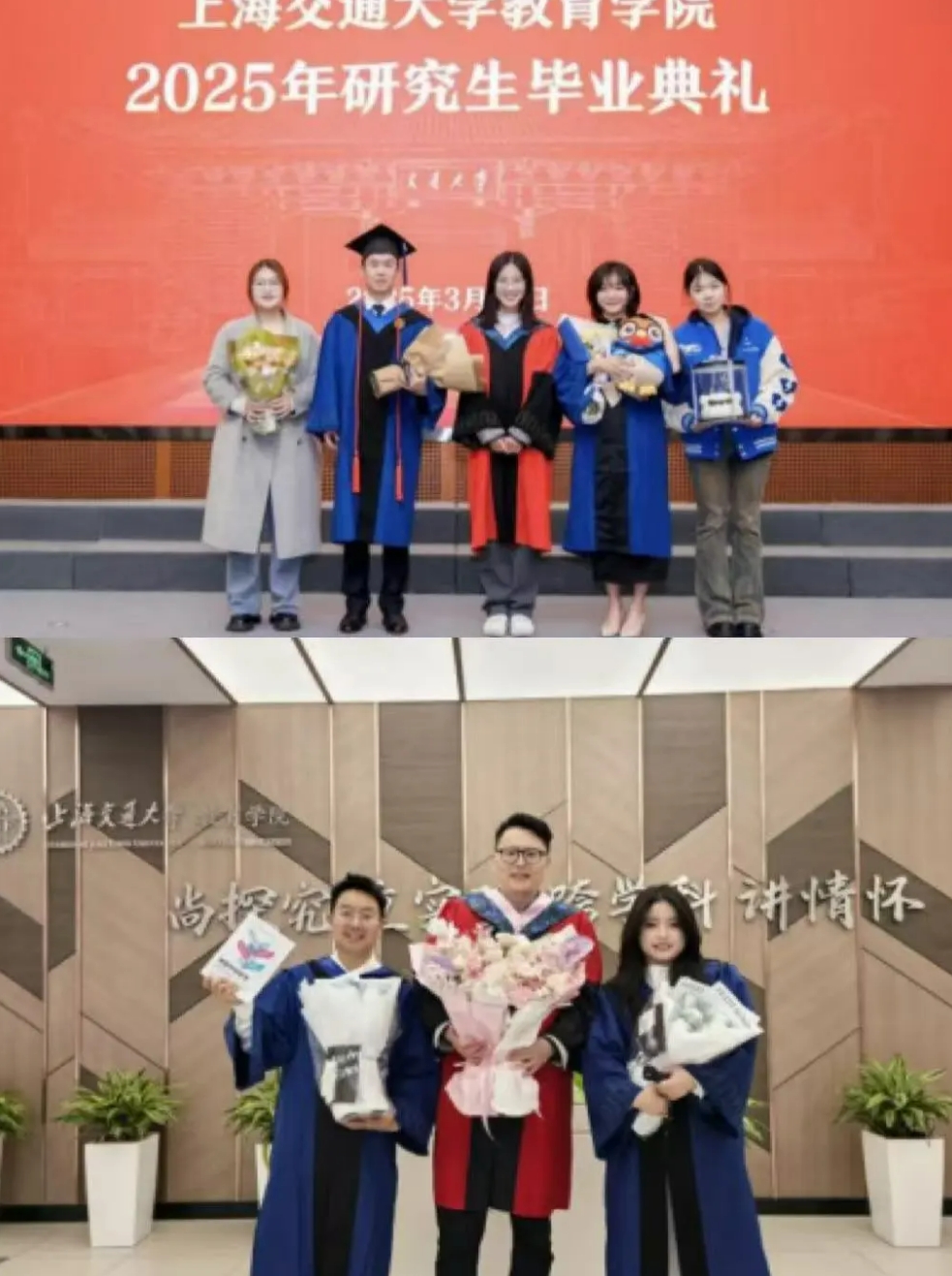
Up to now, the Center has cultivated 19 master's students and 1 doctoral student, with initial outcomes in talent cultivation. Students have published 5 research articles, and 4 master's students have graduated so far. Many students have achieved outstanding academic performance and won various honors, such as the National Scholarship, the Zheng Caicuiju Scholarship for Master of Education, Outstanding Graduate of Shanghai, and Outstanding Graduate of Shanghai Jiao Tong University. After graduation, Chen Zening is pursuing his doctoral degree at Humboldt-Universität zu Berlin. He Mingzhao and Ran Shijie started teaching at key senior high schools in Shanghai and Chongqing respectively.
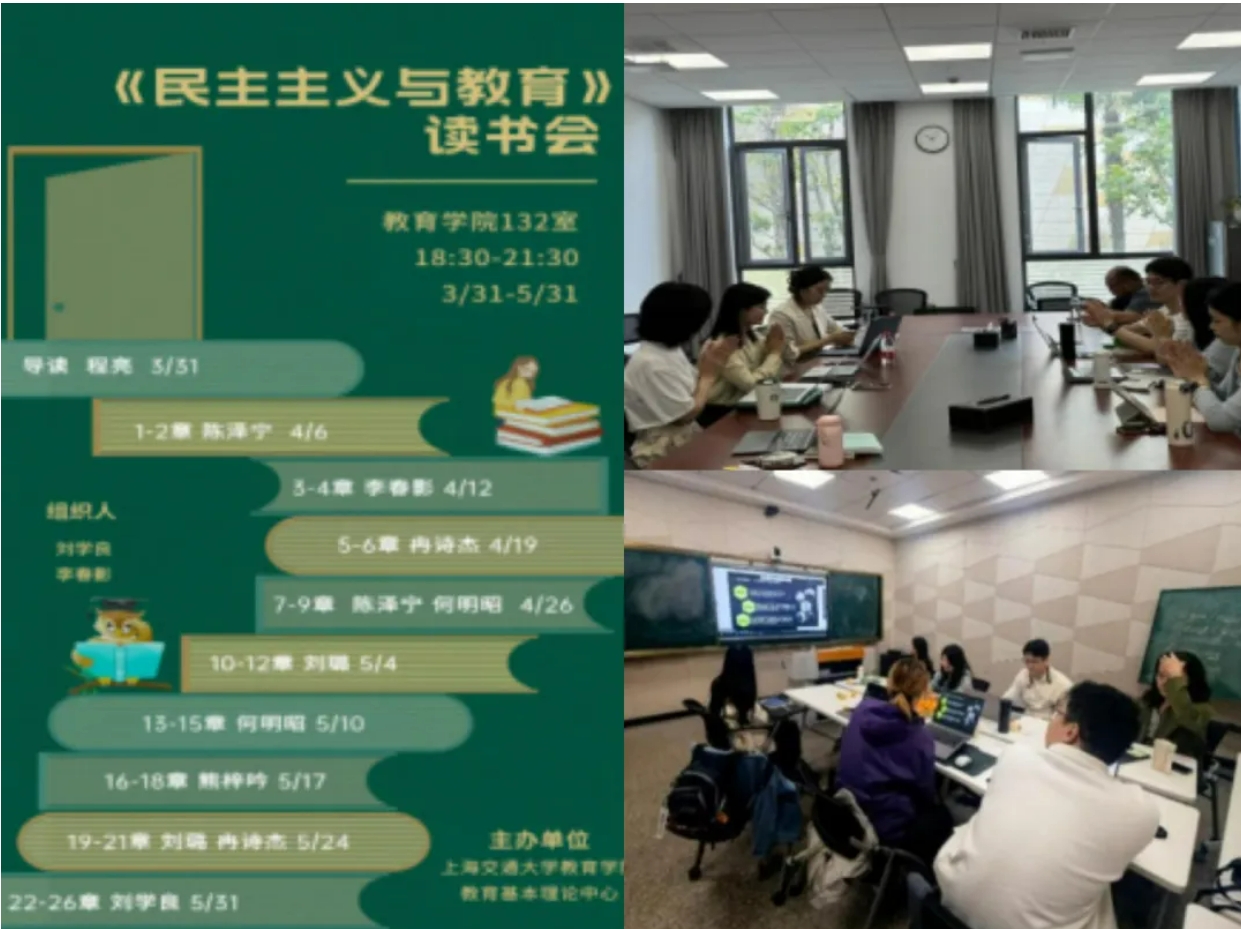
The Center hosts regular reading seminars on fundamental educational theories, open to all teachers and students, focusing on close reading of classic educational works like Émile, How We Think and Democracy and Education. This semester, the Center has launched the "Learning Group & Reading Seminar for the Synergies across Science, Technology and Humanities Education". With the core concept of " synergies across Science, Technology and Humanities Education" and based on the development of relevant postgraduate courses, the seminar focuses on in-depth study of key issues in education and classic works. It invites experts to give theoretical lectures, aiming to create a favorable academic atmosphere and promote in-depth interactions between teachers and students with classic educational works.
3. Social Services
The Center actively promotes the transformation of scientific research achievements, engaging in curriculum development and teaching practices in primary and secondary schools to integrate theoretical research into teaching practice. Faculty members have actively participated in supporting Ding'an Middle School in Hainan and Eryuan No.1 Middle School in Yunnan, contributing to research investigations, educational guidance, and summer volunteer teaching programs.
Lecturer Liu Xueliang has developed and implemented philosophy courses for children, as well as speculative reading and writing courses for middle school students, in multiple primary schools, middle schools, and kindergartens. He has also organized teacher training sessions and campus culture development activities, which have received positive feedback and achieved mutual promotion between theoretical research and teaching practice.

III. Future Plans
Given national priorities in the development of science and technology, and the rise of generative artificial intelligence (AI), efforts concentrate on promoting AI to empower educational transformation. This not only challenges the development of educational theories but also presents new opportunities—with numerous emerging educational issues require urgent solutions, such as the development of students' thinking abilities, the collaboration between STEM and humanities, and the cultivation of emotions and values.
The Center will actively investigate the impact of AI on education, deeply explore the contemporary value of classic educational thoughts, and keep pace with the frontier of educational research in the era. It will explore the comprehensive development of students' knowledge systems, the holistic development of their thinking abilities and values in the digital and intelligent era, and strive for the organic integration of humanistic spirit, scientific culture, and artistic accomplishment in science and humanities education. The Center is committed to continuing to explore a future-oriented educational development model.
Written by LIU Xueliang and GUAN Yuzhen
Edited by CHEN Ruoxi